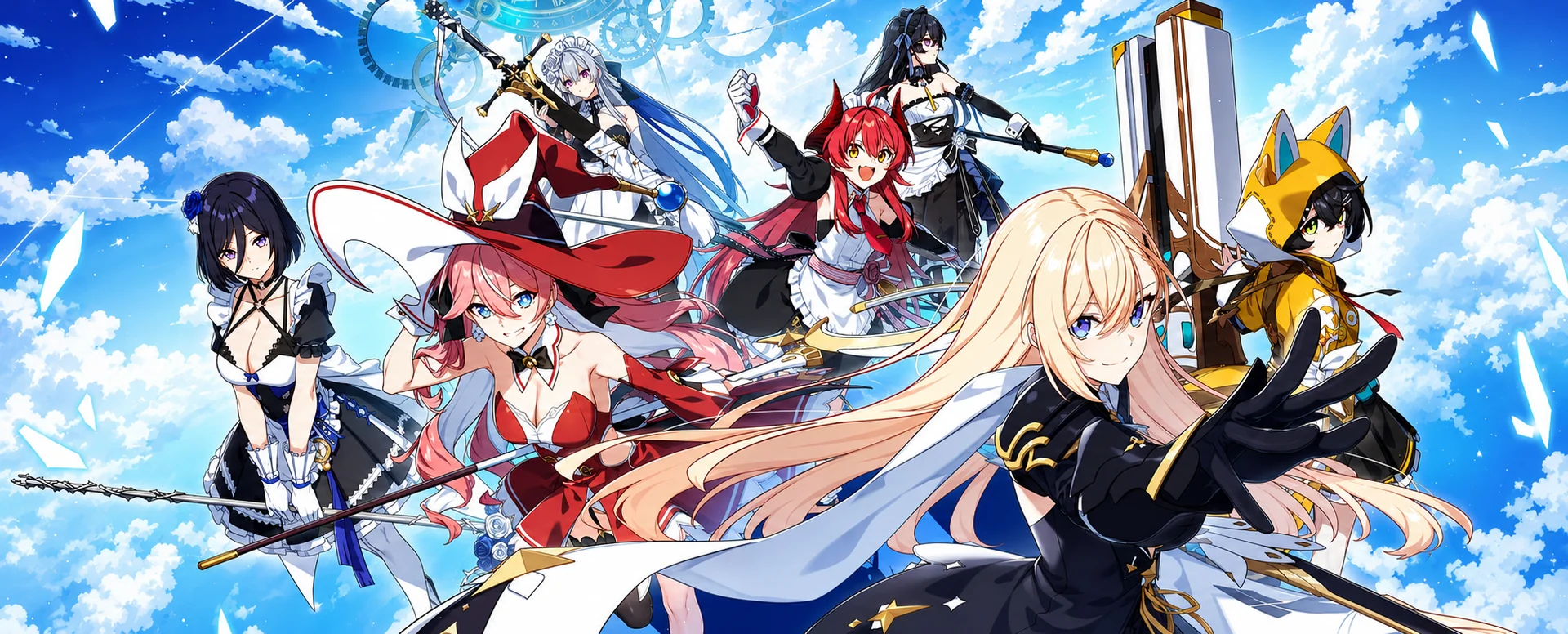
Star Savior is a turn-based collectible RPG that wears its influences openly, sometimes to a fault, pairing an Uma Musume style Journey training loop with Honkai Star Rail style combat and an Epic Seven style gear system. Eden of Gaming has been hands-on since launch and tracking community sentiment across Steam and the wider player base. Here is the EOG verdict on what the game nails, where it overreaches, and whether it is worth starting today.
What it is
Star Savior is a turn-based, anime-styled collectible RPG built around three borrowed pillars. You raise Saviors through Journey, a roguelike training mode in the mold of Uma Musume, take them into turn-based battles where an action bar and speed decide turn order, and gear them with Talismans and Arcanas that lean on Epic Seven style set bonuses. On paper the mode list is long: a story campaign, Arena PvP, Guild War, repeatable Journey runs, and the usual idle and sweep loops. The catch, which the rest of this review keeps returning to, is that the list is wide but shallow, and several of those modes feel bolted on rather than built out.
Smart ideas, shallow execution
The headline systems are easy to like at a glance and easy to exhaust up close. Turn order runs off an action bar rather than fixed initiative, fights build toward a Nova Burst ultimate, and a Break system opens damage windows, but once you find the optimal line there is very little left to actually solve. The Journey training loop is the best idea in the box, yet it too is thinner than it looks, leaning on repetition rather than meaningful decisions, and gear and Talismans go the same way. Most of Star Savior is a single layer deep, which is why the first hours feel rich and the later ones feel like going through the motions.
What it gets right
The wins are real even if they are narrow. Presentation is the standout by a wide margin, with 3D models, splash art, and a soundtrack that are genuinely excellent and the single most praised part of every early impression we read. The launch economy is also generous on the way in, with a free Savior, selector tickets, a large StarStone stockpile, and pity that carries between banners, so a focused player can land a strong first team. Auto-battle and Sweep keep the daily cost low, which is just as well given how little the game asks of you once the systems click.
Spread too thin
This is the heart of the problem. Star Savior tries to be five games at once, a training sim, a turn-based RPG, a gear chaser, a PvP ladder, and a guild game, and it does none of them deeply. Content runs out fast, with little real endgame beyond the launch campaign and repeatable Journey runs. Guild War, which should anchor the social layer, is the clear low point, a poorly designed mode that feels unfinished and unrewarding to play. The technical state does not help either, with frame drops and heavy battery drain reported even on flagship phones and overseas servers adding latency and packet loss outside Korea. The reception captures it. The Steam rating opened near 46 percent positive, then recovered to a Mixed 62 percent inside the first month, enough to retain a core but not enough to win the room over.
Monetization and the dupe wall
This is where the score takes its hit. On paper the gacha is fair, a 4 percent SSR rate with a 200 pull spark and pity that carries over, but the model around it is hungry. SSR Saviors are dupe-gated, needing four copies to reach the level cap, training cards are a second gacha you also pull on, and several progression walls are time-gated with a paid skip dangled in front of them. PvP adds a visible pay-to-win gap. None of it is unusual for the genre, but stacked together it pushes you toward vertical spending faster than most of its peers. For F2P players the practical advice is to reroll for a T0 Savior such as Asherah Waltz, secure the Petra Arcana, and build tall on a small core rather than chasing breadth.
Verdict
Star Savior is one of the best-looking gacha launches of the year attached to a game that bites off far more than it can chew. The art and the core Journey idea are good enough to pull you in, and the Steam recovery from a 46 percent open to a Mixed 62 percent shows it can hold a core audience, but the thin content, the poorly designed Guild War, the surface-level systems, and the hungry economy keep it well short of a clear recommendation. We score it a 7.0, genuinely enjoyable through its gorgeous first stretch and let down by ambition without the depth or polish to back it up. Treat it as a beautiful side game, reroll for a clean start, and do not expect it to hold you for long. If you want a focused, content-rich main game on day one, give it several patches. Start with the EOG.GG Reroll Guide and Tier Lists before you commit.